
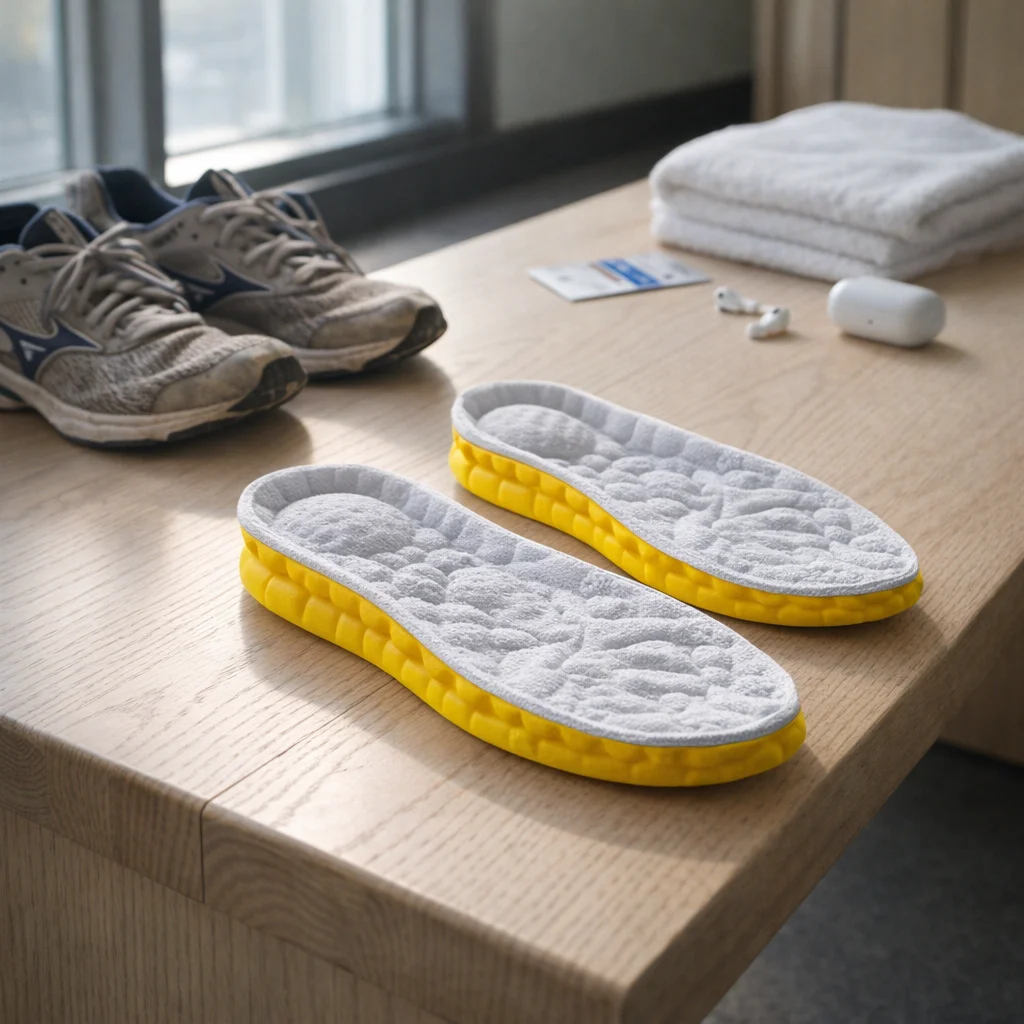
If you have spent any time searching for relief from tired, aching feet, you have almost certainly run into the debate over cloud insoles vs steppers. Both promise to transform the way your shoes feel. Both claim to fix the same problems. And both sit at a price point that makes it tempting to just grab one and hope for the best. But they are not the same thing, and picking the wrong one can mean weeks of discomfort before you realize your mistake.
This guide cuts through the noise. We will walk you through exactly what separates these two types of foot support, how each one performs in real daily life, and which kind of person genuinely benefits from each option. By the end, you will know precisely what to look for, and you will not have to guess.
What Is the Real Difference Between Cloud Insoles and Steppers?
The names sound similar enough that many shoppers assume they are basically interchangeable. They are not. The difference comes down to philosophy: what does your foot actually need, and how should a good insole deliver it?
The Stepper Approach
Steppers are built around the idea of structure. They are typically firmer underfoot, designed to guide your foot into a specific position and hold it there. Think of them as a gentle correction, a physical nudge that encourages your arch to sit where a podiatrist might say it belongs. For people with very specific gait issues or who have been prescribed a particular type of support, this structured approach can be genuinely helpful.
The tradeoff is that firmness. Many people who try steppers for the first time describe a break-in period where the insole feels almost aggressive. Your foot is being redirected, and that takes adjustment. For casual wearers, gym-goers, or anyone who spends long hours on their feet without a diagnosed structural issue, that firmness can create new discomfort even as it tries to solve old problems.
The Cloud Insole Approach
Cloud insoles take the opposite position. Rather than forcing your foot into alignment, they create an environment where your foot can move naturally while being cushioned from the impact of every step. The focus is on absorbing shock, distributing pressure evenly, and letting your foot breathe, literally and figuratively.
The name "cloud" is not just marketing. The sensation of stepping onto a well-made cloud insole is noticeably different from stepping onto a standard flat insert or a firm stepper. There is a give to it, a responsiveness that makes the ground feel softer without making you feel unstable.
"The best insole is not the one that does the most. It is the one that solves your specific problem without creating new ones."
A Quick Side-by-Side
| Factor | Cloud Insoles | Steppers |
|---|---|---|
| Primary goal | Cushion and comfort | Structure and correction |
| Underfoot feel | Soft, responsive, adaptive | Firm, supportive, rigid |
| Break-in period | Minimal to none | Can take days to weeks |
| Best for | Daily wear, running, gym use | Specific gait correction |
| Breathability | Usually high | Varies widely |
| Shock absorption | Excellent | Moderate |
How Each One Actually Feels on Your Feet
Reading about insoles is one thing. Understanding how they translate into your actual daily experience is something else entirely. Let us paint a real picture.
A Morning Run With Cloud Insoles
Imagine lacing up your running shoes before a 5K. The first thing you notice is that the insole conforms slightly to the shape of your foot as you put your weight on it. Not in a mushy, unstable way, but in a way that feels like the shoe is meeting you where you are. Each footstrike lands softly. The impact that normally travels up through your heel, into your ankle, and sometimes all the way to your knees, gets absorbed before it can do damage.
By kilometer three, you are not thinking about your feet at all. That is the goal. Great insoles disappear into the background of your run. They do their job so quietly that you only notice them when you take them out and try running without them.
A Long Shift With Steppers
Now picture a nurse finishing hour six of a twelve-hour shift. She chose steppers because she read that structured support is good for people who stand all day. The first two hours felt fine. By hour four, there is a new pressure point forming along her arch. The insole is doing exactly what it was designed to do, but her foot was not quite the shape the designer had in mind.
This is not a knock on steppers as a category. It is an honest look at why so many people who try them end up switching. The margin for error with a firm, structured insert is narrow. If your foot matches the template, it works beautifully. If it does not, you are in trouble.
Breathability: The Factor Nobody Talks About Enough
Feet sweat. This is not a pleasant fact, but it is a relevant one. An insole that traps heat and moisture creates an environment that is uncomfortable at best and genuinely problematic at worst. Cloud insoles that incorporate breathable upper layers allow air to circulate as you move, keeping the temperature inside your shoe more stable throughout the day. Many steppers, particularly the thicker, more rigid varieties, can trap warmth in a way that becomes noticeable after a few hours of wear.
Who Should Choose Which: A Practical Breakdown
Rather than declaring one type universally better, the honest answer is that the right choice depends entirely on who you are and what you are asking your insoles to do.
You Probably Want Cloud Insoles If...
- You are on your feet for long stretches, whether that is a gym session, a long workday, or a weekend hike
- Your main complaint is general fatigue, soreness, or the feeling that your shoes just do not have enough cushion
- You run, walk, or train regularly and want something that can keep up with your pace
- You have tried firmer insoles before and found them uncomfortable or difficult to break in
- You want something you can move between different pairs of shoes without a major adjustment period
You Might Consider Steppers If...
- A healthcare professional has specifically recommended a structured orthotic insert for a diagnosed condition
- You have a very high arch and need something that actively fills the space underneath it
- You are willing to invest time in a break-in period and have a specific biomechanical goal in mind
"For the majority of everyday athletes and active people, the problem is not that their foot is structurally wrong. The problem is that their shoes are not giving their feet enough support and cushion to handle the demands of their day. Cloud insoles solve that problem directly."
The Fitness Enthusiast's Dilemma
If you train regularly, you are putting your feet through more than the average person. Every squat, every box jump, every treadmill kilometer sends force up through your feet. The cumulative effect of that impact, day after day, is what leads to the kind of chronic soreness that makes you dread leg day before it even starts.
Cloud insoles were essentially designed for this person. The shock-absorbing cushion layer means that impact gets managed before it reaches your joints. Over weeks and months of consistent training, that adds up to less fatigue, faster recovery, and the ability to push harder without paying for it the next morning.
Cloud Insoles vs Steppers: Performance Where It Counts
When we talk about cloud insoles vs steppers in the context of real performance, we need to look at the moments that actually matter: the hard runs, the long days, the workouts that push your limits.
Shock Absorption During High-Impact Activity
This is where cloud insoles pull ahead significantly. The multi-layered cushioning design found in quality cloud insoles is built specifically to manage the kind of repetitive impact that running and gym training create. When you land after a jump or strike the ground at pace, that energy has to go somewhere. A well-designed cloud insole redirects it outward and absorbs it gradually, rather than letting it spike straight up through your heel.
Steppers, because of their firmer construction, transfer more of that impact force rather than absorbing it. For walking at a moderate pace, this is manageable. For running or high-intensity training, the difference becomes noticeable fairly quickly.
Orthopedic Care for Everyday Athletes
The phrase "orthopedic care" often makes people think of medical clinics and prescription devices. But orthopedic support in the context of everyday insoles simply means that the product is designed with the mechanics of your foot in mind. It considers how your heel lands, how pressure distributes across your midfoot, and how your toes push off with each step.
Quality cloud insoles incorporate these principles without the rigidity of traditional orthotics. The result is something that feels like comfort but functions like care. Your foot is being supported intelligently, not just padded randomly.
Longevity and Consistency
One underrated factor in the cloud insoles vs steppers conversation is how each type holds up over time. Firmer steppers can maintain their shape for longer because they are not compressing and releasing with every step. However, cloud insoles made with quality cushioning materials hold their responsiveness well through months of regular use, and because they feel good from day one, you are more likely to actually wear them consistently rather than swapping them out when they become uncomfortable.
| Use Case | Cloud Insoles | Steppers |
|---|---|---|
| Running and cardio | Excellent | Moderate |
| Gym training | Excellent | Moderate |
| All-day standing | Very good | Good (if fit is right) |
| Casual walking | Excellent | Good |
| High-arch correction | Good | Very good |
| Heat and moisture management | Very good | Moderate |
| Immediate comfort | Excellent | Fair |
The Verdict: What Most Shoppers End Up Choosing
After looking honestly at the cloud insoles vs steppers comparison across every angle, a clear picture emerges. For the vast majority of people who are searching for relief from foot fatigue, better performance during workouts, or simply a more comfortable day on their feet, cloud insoles are the more practical, more immediately satisfying choice.
Steppers have a place, and that place is in the hands of someone who has a specific structural need that has been identified by a professional. For everyone else, the firmness and rigidity of a stepper creates as many problems as it solves.
Cloud insoles, by contrast, deliver comfort from the first wear. They handle shock. They breathe. They adapt to your foot rather than demanding your foot adapt to them. And at a price point that makes them genuinely accessible, there is very little reason to settle for less.
Our Pick for Everyday Athletes and Fitness Enthusiasts
The 4D Cloud Technology Sports Insoles from Velvtread bring together everything that makes a cloud insole worth buying. The cushioning responds to your movement, the breathable upper keeps things fresh during long sessions, and the shock absorption is the kind you notice immediately when you slip them into your training shoes for the first time.
They work in running shoes, gym trainers, everyday sneakers, and even casual footwear. The transition from your old flat insoles is not a break-in period, it is more of a revelation. The kind that makes you wonder why you waited so long.
If you are ready to stop guessing and start feeling the difference, check out the 4D Cloud Technology Sports Insoles at Velvtread and give your feet what they have been asking for.
Frequently Asked Questions
Are cloud insoles better than steppers for running?
For most runners, yes. Cloud insoles are designed to absorb the repetitive impact of running in a way that firmer steppers simply cannot match. Each footstrike sends a significant amount of force through your foot and up into your joints. A well-made cloud insole manages that force before it causes fatigue or soreness. Steppers, because of their firmer build, tend to transmit more of that impact rather than absorbing it, which can become uncomfortable over longer distances.
Can I use cloud insoles in any type of shoe?
Most cloud insoles are designed to be versatile enough to fit into a wide range of footwear, from running shoes and gym trainers to casual sneakers and everyday shoes. The key is to check the sizing and trim the insole to fit your shoe if needed. Many quality cloud insoles come with guidelines for trimming so you can get a precise fit regardless of shoe style.
How long do cloud insoles last compared to steppers?
This depends on how often you use them and the intensity of your activity. For regular gym-goers and runners, a quality pair of cloud insoles typically maintains its cushioning and responsiveness for several months of consistent use. Steppers may retain their shape for longer because they are firmer, but if the fit was never quite right to begin with, longevity is not much of an advantage. Replace your insoles when you notice the cushioning feels less responsive or when you start feeling more fatigue than usual after your regular activities.
Do cloud insoles help with plantar fasciitis?
Many people with plantar fasciitis find significant relief from cloud insoles because the cushioning reduces the impact stress on the heel and arch with every step. While cloud insoles are not a medical treatment, the combination of shock absorption and even pressure distribution can make a meaningful difference in day-to-day comfort. If you have been diagnosed with plantar fasciitis, it is always worth discussing insole choices with your healthcare provider, but cloud-style cushioning is frequently recommended as part of a broader comfort strategy.
Is there a break-in period for cloud insoles?
Unlike firm steppers, quality cloud insoles typically feel comfortable from the very first wear. Because they adapt to your foot rather than trying to redirect it, there is no period of adjustment where the insole feels uncomfortable or causes new pressure points. Most people notice the difference immediately and find that their feet feel noticeably less fatigued by the end of the first day. If an insole causes discomfort from day one, that is usually a sign that it is not the right fit for your foot shape.