
Table of Contents
If you have ever kicked off your shoes at the end of a long day and felt that wave of relief wash over your entire body, you already understand the problem. Your feet carry you through everything, and most standard shoe insoles do almost nothing to help them. That is exactly why the search for the best cloud insoles has exploded over the past few years. People are tired of sore arches, aching heels, and that bone-deep fatigue that sets in around mile three of a run or hour six of a shift. They want something better. Something that actually feels like walking on air.
This guide is for anyone who has stood in a sporting goods aisle, stared at a wall of insole options, and had absolutely no idea what to pick. We are going to break down exactly what separates a genuinely great cushioning insole from the cheap foam pads that compress within a week and never recover. By the end, you will know precisely what to look for, what to ignore, and which option we think is worth your money right now.
Why Your Insoles Matter More Than Your Shoes
Here is a truth most people learn the hard way: you can spend three hundred dollars on a pair of running shoes and still have miserable feet if the insole is garbage. The factory insoles that come with most footwear are almost always an afterthought. They are thin, flat, and designed to fill space rather than support your foot. Manufacturers pour their budget into the outsole and the upper because that is what you see in the store. What goes inside is often the last consideration.
Swapping your stock insole for a high-quality cushioning insole is one of the most cost-effective upgrades you can make to any pair of shoes. Runners who make the switch often describe it as getting a brand new pair of shoes. People who stand all day at work report feeling noticeably less wiped out by the end of their shift. Even casual walkers notice that their knees and lower back stop complaining as much.
"The insole is the only part of your shoe that is in direct, constant contact with your foot. It is the foundation of everything. Getting it right changes how you feel from the ground up."
The reason the impact is so dramatic comes down to shock absorption. Every step you take sends a force through your heel that travels up through your ankle, knee, hip, and lower back. A good insole intercepts that force and dissipates it before it becomes your problem. A bad one just lets it pass right through.
The Cumulative Effect of Poor Foot Support
Think about what happens when you ignore a small pebble in your shoe. For the first few minutes it is annoying. An hour later, your whole foot is sore. By the end of the day, you are walking differently to compensate, and now your knee hurts too. Poor insole support works the same way, just slowly enough that most people never connect the dots. They blame their knees, their back, their age. Often the real culprit is what is happening at ground level.
The best cloud insoles address this by creating a genuinely cushioned, responsive surface that your foot can sink into slightly with each step, then spring back to meet you for the next one. It is the difference between walking on hardwood and walking on a well-maintained track.
What Actually Makes an Insole Feel Like a Cloud
The term "cloud insole" gets thrown around a lot in marketing, but not every soft insole earns that description. There are a few specific qualities that separate the ones that genuinely transform your experience from the ones that just feel nice in the store for thirty seconds before you buy them.
Responsive Cushioning That Bounces Back
The single most important quality in a great cushioning insole is rebound. Soft is easy. Plenty of cheap foam is soft. The problem is that cheap foam compresses under your weight and stays compressed. After a few weeks, it has molded itself into a flat, useless shape and you are basically back to walking on nothing. True cloud-like comfort comes from a material that compresses to absorb impact and then immediately springs back to its original shape, ready for the next step.
This responsive quality is what makes the difference between an insole that feels great on day one and one that still feels great on day ninety. When you are evaluating the best cloud insoles, this rebound quality is the first thing to assess.
Breathability and Moisture Management
A cushioning insole that traps heat and moisture is going to create problems of its own. Sweaty, overheated feet are uncomfortable, and they are also more prone to blisters and odor. The best options pair their cushioning layer with a breathable top surface that allows air to circulate and moisture to move away from your skin. This is especially important for runners and anyone who is active for extended periods.
Look for insoles where the top layer has a textured or open-weave surface rather than a solid, flat finish. That texture is not just aesthetic. It creates small channels for air movement and reduces the contact area between your foot and the insole, which means less heat buildup over time.
Arch Support and Foot Alignment
Pure cushioning without any structural support can actually make certain foot problems worse over time. The best cloud insoles strike a balance: they are soft and forgiving underfoot while still providing enough shape to guide your foot into a healthy position. This is particularly important for people who overpronate (where the foot rolls inward with each step) or who have flat arches that need a little help maintaining their natural curve.
You do not need a rigid orthopedic insert to get good alignment support. Many of the best cushioning insoles build gentle arch contouring right into their shape, so the support is there without feeling stiff or intrusive.
Heel Cupping
The heel takes the most punishment of any part of your foot, especially during running and high-impact activities. A well-designed insole will have a slightly cupped or contoured heel area that cradles this part of your foot rather than letting it sit flat. This cupping does two things: it concentrates the cushioning exactly where you need it most, and it stabilizes the heel so it does not slide around inside the shoe with each step.
How to Choose the Best Cloud Insoles for Your Life
Not every great insole is great for every person. Your ideal pick depends on how you use your feet, what kind of shoes you wear, and what specific problems you are trying to solve. Here is a practical framework for making the right call.
Match the Insole to the Activity
Running puts very different demands on an insole than standing at a retail job for eight hours. Runners need maximum shock absorption and rebound because the impact forces are much higher. They also need an insole that stays securely in place through lateral movements and direction changes. People who stand still for long periods need sustained cushioning that does not compress and flatten over hours of continuous pressure.
The good news is that the best cloud insoles tend to perform well across both scenarios because their core cushioning technology is fundamentally sound. But if you are a dedicated runner logging serious miles, you may want to prioritize rebound above all else. If you are on your feet at work, prioritize sustained softness and breathability.
Consider Your Shoe Type
An insole that is too thick will make your shoe feel cramped and could actually create new problems by pushing your foot up into a position that the shoe was not designed for. Most quality insoles are designed to replace the existing factory insole rather than stack on top of it. Pull out the old one, drop in the new one, and you should have a perfect fit.
If you are putting insoles into low-profile shoes like dress shoes or certain casual sneakers, look for a slimmer profile option. For athletic shoes and running trainers, which tend to have more interior volume, a fuller-profile insole with more cushioning depth is usually the better choice.
Think About Sizing and Trimming
Many of the best cloud insoles come in size ranges rather than exact sizes, and they include trim lines so you can cut them to fit your specific shoe. This is actually a feature, not a limitation. It means one insole can fit a range of shoe styles and shapes. The trim lines are usually marked clearly on the underside of the insole, and a simple pair of scissors does the job in about thirty seconds.
Budget vs. Premium: Where Is the Sweet Spot?
| Factor | Budget Insoles | Mid-Range Cloud Insoles | Premium Orthopedic Insoles |
|---|---|---|---|
| Initial Comfort | Variable | Excellent | Excellent |
| Longevity | Low | Good | Very High |
| Breathability | Poor | Good | Good to Excellent |
| Shock Absorption | Minimal | Strong | Strong |
| Value for Money | Low | High | Moderate |
| Best For | Short-term use | Everyday and active use | Diagnosed conditions |
For most people, the mid-range cloud insole category represents the best value by a significant margin. You get genuine performance without paying the premium that custom or clinical orthopedic insoles command. Unless you have a diagnosed condition that requires a prescribed orthotic, a quality mid-range cushioning insole is almost certainly all you need.
Our Top Pick: The Insole That Changed Our Mind About Comfort
We have tested a lot of insoles. Most fall into two camps: the ones that feel incredible for a week and then go flat, and the ones that are so stiff they feel more like a correction device than a comfort upgrade. Finding something that genuinely delivers on the cloud insole promise over the long term is rarer than it should be.
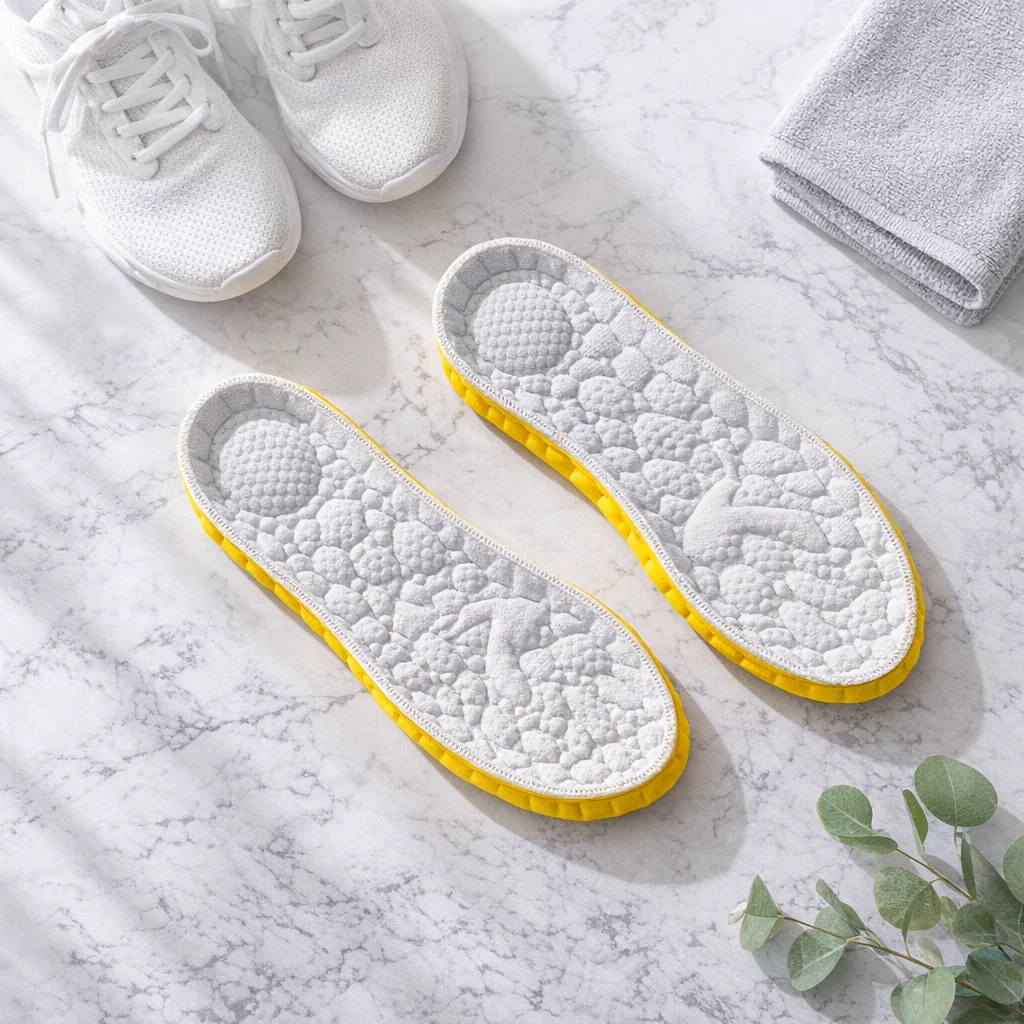
The Velvtread 4D Cloud Technology Sports Insoles land in a different category entirely. From the first step, there is a noticeable difference in how the cushioning responds. It is not just soft. It is actively springy, like the insole is meeting your foot and pushing back gently with each stride. That quality does not fade after a few weeks of use, which is the real test.
The Experience in Practice
Imagine finishing a five-kilometer run and realizing your feet are not the thing that stopped you. Or standing through a six-hour shift and walking to your car without that familiar heel-ache that used to greet you at the end of every workday. That is the kind of before-and-after these insoles consistently deliver for people who make the switch from standard shoe pads.
The breathable top surface keeps things comfortable even during high-output activities. There is no unpleasant heat buildup, no slipping around inside the shoe, and no rough edges that create friction points. They fit the way a well-designed insole should: like they were always supposed to be there.
Honest Pros and Cons
What works really well:
- The rebound quality holds up over time, which is genuinely rare at this price point
- Breathability is noticeably better than most competitors in the same range
- The heel support area does an excellent job of stabilizing the foot without feeling rigid
- Works across a wide range of shoe types, from running trainers to casual sneakers
- The price makes it easy to keep a spare pair for a second pair of shoes
A few honest caveats:
- If you need a clinically prescribed orthotic for a diagnosed condition, these are a comfort upgrade, not a medical device. See a podiatrist for specific medical needs.
- Very narrow dress shoes may not have enough interior volume to accommodate the full cushioning depth comfortably.
- Like any insole, they will eventually need replacing. Plan on refreshing them every six to twelve months depending on usage.
"At this price, the performance-to-cost ratio is hard to argue with. These are the kind of insoles that make you wonder why you waited so long to try them."
How They Compare to the Competition
The main alternatives at this price tier tend to sacrifice one thing to deliver another. Some offer great initial softness but poor durability. Others have decent longevity but a breathability problem that makes them unpleasant for anything beyond light walking. The Velvtread insoles manage to avoid both of those common trade-offs, which is what puts them at the top of our recommendation for anyone looking for the best cloud insoles without a premium price tag.
Who Needs Cloud Insoles the Most
Technically, anyone who wears shoes can benefit from a quality cushioning insole. But there are certain groups of people for whom the upgrade from stock to cloud insole is genuinely transformative rather than just nice to have.
Runners and Gym-Goers
High-impact activity multiplies the stress your feet absorb with every step. Runners in particular are putting their feet through thousands of repetitive impacts per session, and the cumulative toll shows up as knee pain, shin splints, plantar fasciitis, and general fatigue. A responsive cushioning insole does not eliminate all of that risk, but it meaningfully reduces the impact force with each stride. For gym-goers doing jump training, HIIT, or any kind of plyometric work, the same logic applies.
People Who Stand All Day
Nurses, teachers, retail workers, chefs, warehouse staff. If your job keeps you on your feet for the majority of your shift, the insole you are standing on matters enormously. The fatigue from standing is different from the fatigue from running, but it is just as real and just as addressable with the right foot support. A soft, breathable insole that maintains its cushioning through eight or more hours of continuous use is a genuine quality-of-life upgrade for anyone in this category.
Anyone Recovering from Foot or Lower Body Discomfort
Plantar fasciitis, heel spurs, general arch soreness. These conditions make every step a negotiation. While a cushioning insole is not a cure, it reduces the impact that aggravates these issues and gives the affected tissue a better environment to recover. Many people find that a good cloud insole, combined with appropriate rest and stretching, is enough to get them through their day without the constant discomfort they had been managing before.
Casual Wearers Who Just Want More Comfortable Shoes
You do not need to be a marathon runner to benefit from better insoles. If you walk the dog every morning, spend weekends exploring new neighborhoods, or just want your everyday sneakers to feel better than they do right now, a quality cushioning insole delivers real, noticeable improvement. This is probably the largest group of people who would benefit, and they are also the most likely to underestimate how much difference a simple insole swap can make.
Frequently Asked Questions
How often should I replace my cloud insoles?
For most people using them daily in athletic or active contexts, every six to nine months is a reasonable replacement schedule. If you are using them primarily for light daily wear, they can last up to twelve months before the cushioning starts to noticeably degrade. A simple test: if you press the insole firmly with your thumb and it does not spring back quickly, it is time for a new pair. The rebound quality is the clearest indicator of remaining life.
Can I use cloud insoles in any type of shoe?
Most cushioning insoles work well in athletic shoes, running trainers, casual sneakers, and work boots that have reasonable interior volume. Very slim or narrow shoes, like certain dress shoes or minimalist footwear, may not have enough space to accommodate a full-profile insole comfortably. In those cases, a thinner insole option is a better fit. For everything else, the standard approach is to remove the factory insole and replace it directly with the cloud insole.
Are cloud insoles the same as orthopedic insoles?
Not exactly. Orthopedic insoles are typically prescribed or recommended by a medical professional to address a specific diagnosed condition, and they tend to be quite structured and rigid. Cloud insoles are comfort-focused cushioning insoles designed for everyday use and general foot support. They can absolutely help with common complaints like arch soreness and heel fatigue, but they are not a substitute for a clinically prescribed orthotic if you have a specific medical need. For most people without a diagnosed condition, a quality cloud insole is all they need.
Do I need to trim cloud insoles to fit my shoes?
It depends on the specific product and your shoe size. Many insoles come in size ranges with trim lines on the underside so you can cut them to fit your exact shoe shape. This is a simple process that takes less than a minute with a pair of scissors. If your insole comes with trim guidance, always trim before inserting to ensure a clean fit that does not bunch or fold at the toe.
Will cloud insoles help with knee or back pain?
They can, and for many people they do. Because a cushioning insole absorbs and disperses impact before it travels up the kinetic chain, it reduces the stress that reaches the knees, hips, and lower back with each step. People who have switched to quality cloud insoles frequently report that knee and back discomfort improves noticeably, especially during and after walking or running. That said, persistent joint or back pain has many potential causes, and if your symptoms are significant or ongoing, it is worth talking to a healthcare professional rather than relying on insoles alone as a solution.
The Bottom Line
The search for the best cloud insoles does not have to be complicated. You need something that genuinely cushions without going flat, breathes well enough to stay comfortable through extended activity, and provides enough structure to keep your foot properly supported. Most insoles on the market fail on at least one of those counts.
The Velvtread 4D Cloud Technology Sports Insoles get all three right, and they do it at a price that makes the upgrade a complete no-brainer. Whether you are logging miles on the pavement, grinding through long shifts, or just trying to make your everyday shoes feel like something you actually want to wear, these insoles deliver the kind of transformation that makes you wonder how you managed without them.
Your feet carry you through everything. It is worth giving them something better to stand on.